



Pubs have been integral to British life for hundreds of years, and Bath is the perfect place to discover some of the country’s most storied examples.
Embark on a pub crawl that will take you back in time to the late 14th century, through Bath’s Georgian and Tudor eras, and includes what is widely regarded as England’s oldest public house!
1. The Grapes
There’s no better place to start than at the favourite haunt of many a Bathonian.
The Grapes is housed inside one of the city’s oldest buildings, which dates back to the late 1500s. Originally constructed as a grand Elizabethan townhouse for the Mayor of Bath, the building has played several roles over its over 400 year life, serving as a lodging house in the late 17th century, as a winery in the mid-18th century, and finally as a pub from the late 18th century onwards.
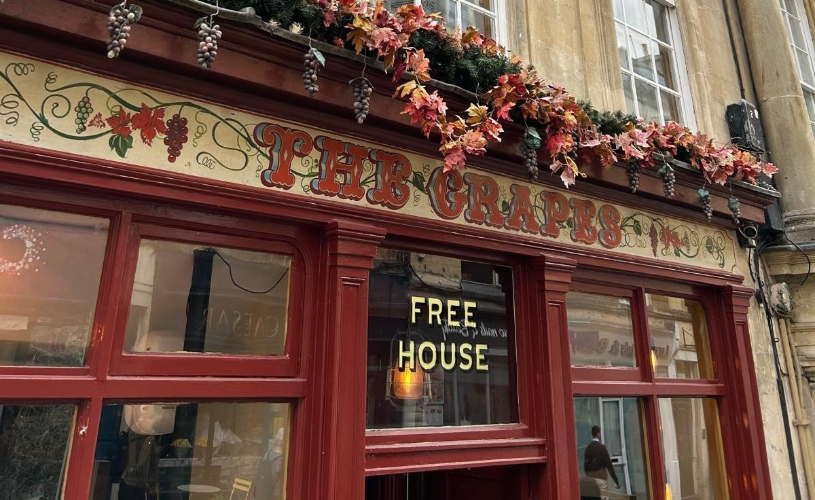
Image: The Grapes
These roles are referenced in the pub’s current identity; the name is a nod to the building’s time as a vintner’s property, while the five on-site rooms are dubbed ‘Pocock’s Lodgings’ after the Ms. Pocock who operated the Tudor-era lodging house.
Today, the pub is a vibrant hive of activity, not only beloved for serving the finest local tipples, but also for hosting live music performances seven days a week. Jazz, Trad Irish, blues, skiffle; whatever you fancy sipping your pint to, you’ll find it here!
2. The Crystal Palace
Just a five-minute walk away from The Grapes, on the quaint Abbey Green, is The Crystal Palace. This pub started out in life as a lodging house named ‘The Three Tuns’ in the mid-17th century, which is rumoured to have hosted none other than Admiral Horatio Nelson and his wife Fanny in 1798. Raise a glass to him inside the pub’s left-hand bar, which features wood panelling from the original lodging house salvaged during the building’s conversion to a pub in 1851.
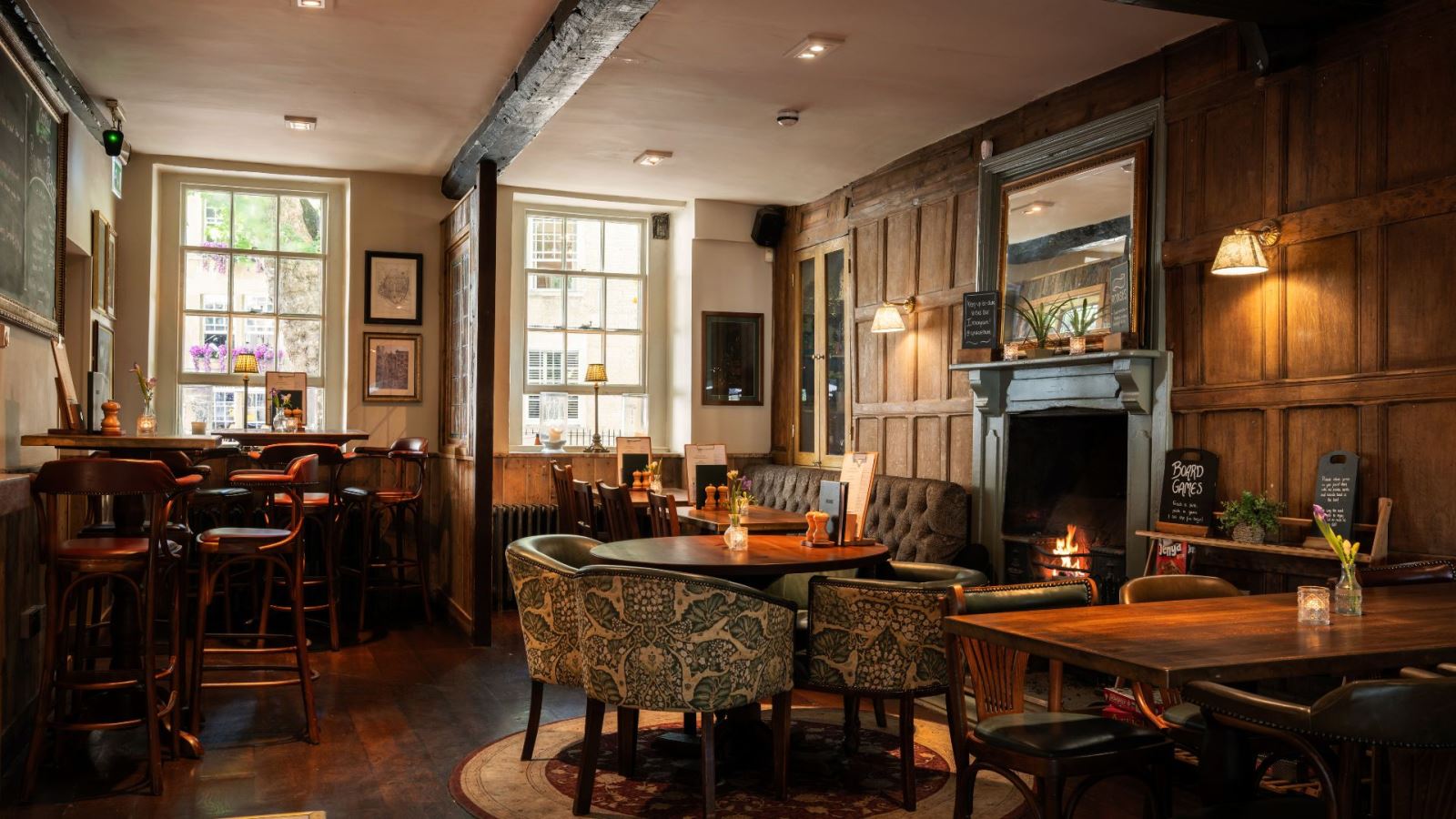
Image: The Crystal Palace
The pub’s name may seem incongruous, given its location in the heart of Bath. However, it reflects the original owners’ excitement for the Great Exhibition in progress at The Crystal Palace exhibition centre in London at the time the pub opened. It was this building that the pub was named after, which sadly burned down in 1936 after standing for just 85 years.
However, its namesake is still going strong, thanks to its popularity as a place to unwind over drinks or a spot of classic pub grub after a day exploring Bath. Sit inside or out in the ‘secret garden,’ with a wide range of Fuller’s Brewery beers on tap, alongside a selection of wholesome British dishes, including the all-important roast dinner on Sundays!
3. The Huntsman
Just steps away from The Crystal Palace, The Huntsman stands on the edge of the characterful North Parade Passage and Terrace Walk, overlooking Parade Gardens.
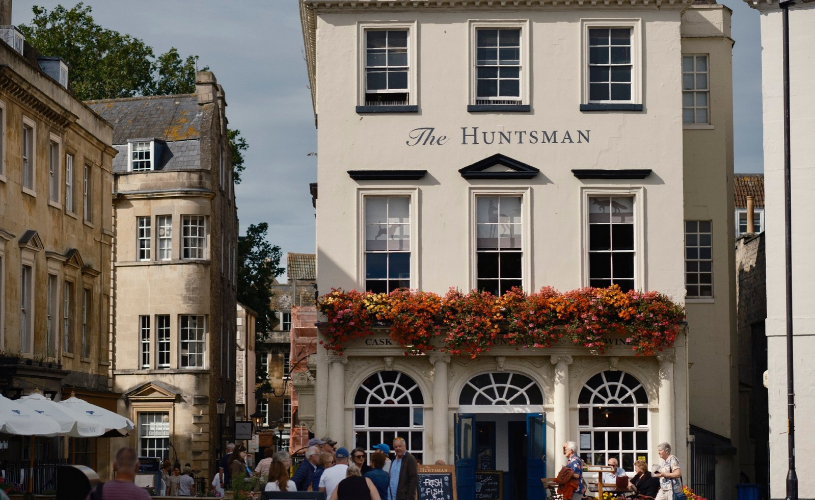
Image: The Huntsman
The building that The Huntsman occupies was designed and built by the then-young and upcoming architect, John Wood the Elder, between 1748 and 1750; examples of his later works include The Circus and Royal Crescent.
While it hasn’t always been a pub, the site has been used for the sale of various drinks to the public since its inception, beginning as a Georgian coffee shop called the ‘Parade Coffee House,’ before becoming the ‘Terrace Walk Wine Vaults’ in the 19th century, and evolving into its current form in 1906.
Step inside today, and you’ll find the same Georgian grandeur that visitors to the building have enjoyed for almost 300 years, with plenty of comfortable modern touches. This sets the perfect scene for a relaxed drink or meal from the menu of hearty British dishes.
4. The Saracen’s Head
This traditional coaching inn on Broad Street is widely considered to be the oldest pub in Bath, built from the ground up to serve as an inn in 1713. The building’s history is visible everywhere thanks to its perfectly preserved interiors, including the trademark low, beamed ceilings that were in vogue at the time it was constructed.
The pub also features a dedicated ‘Dickens corner,’ named in honour of author Charles Dickens, who stayed at the inn in 1835 while writing his first novel, The Pickwick Papers.
5. The Garrick’s Head
Based next door to the Theatre Royal Bath, this pub is only seven years younger than The Saracen’s Head. Built in 1720 for Bath’s famed Master of Ceremonies and fashion icon Richard ‘Beau’ Nash, who put the city on the map as a trendy spa town, the building originally served as his private gambling club for wealthy, high society clients.

Image: The Garrick's Head, credit Robert Howes
It was only in the early 19th century that the building became a pub, thanks to the establishment of the then-new Theatre Royal next door, which brought with it plenty of demand for pre and post-show drinks among both actors and the public!
These theatrical ties are clear in the pub’s name, which honours the legendary Georgian actor David Garrick. While Garrick passed away 16 years prior to the pub opening, he had been a frequent visitor to Bath throughout his life, both to perform at the Old Theatre Royal, and take the waters in the city’s spas.
The Garrick’s Head holds a significant role in Bath’s LGBTQ+ history, as the city’s first recognised gay pub, serving as a safe space since at least the 1930s. Discover more in our guide to LGBTQ+ Historic Sites in Bath.
6. The Cork
There aren’t many places you can eat, drink and party inside a former 18th century debtors’ prison, but The Cork is one of them.
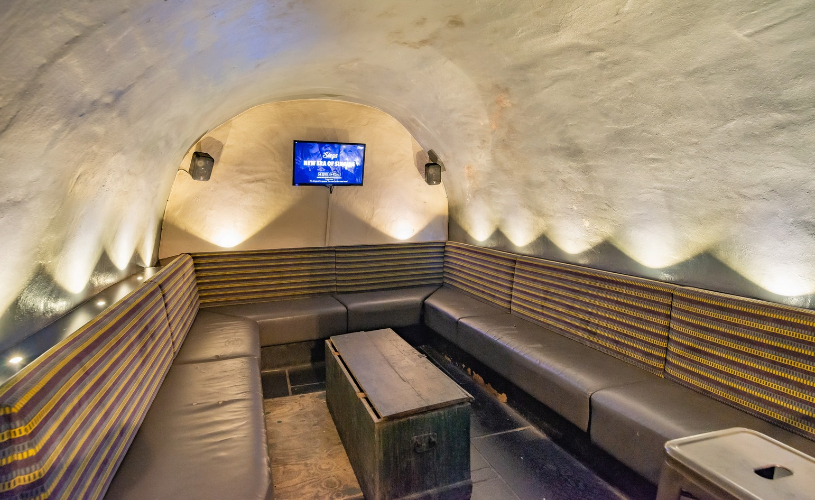
Image: Karaoke pods at The Cork
Based within a post-war reconstruction of the original Georgian pub that stood on the same site from 1770 until 1942, The Cork boasts a sizable basement and vaults. Between 250 and 185 years ago, these spaces were occupied by prisoners unable to pay personal and commercial debts, as part of a massive subterranean gaol.
Today, these former cells are put to a much cheerier use, with a basement bar area, regular DJ sets, and private hire karaoke pods. Ironically, it’s the perfect spot for the free spirited!
7. The Inn at Freshford
It’s time to head outside the city into its surrounding countryside, where the pubs only get older. Start in the tiny village of Freshford on the border of Somerset and Wiltshire, just one train stop away from Bath Spa railway station. Perched on the eastern edge of the village is the aptly named Inn at Freshford, which has a history stretching back over 500 years.

Image: The Inn at Freshford
As you approach, it’s very easy to imagine the inn as it would have appeared when it was first built as a scenic Tudor-era rest stop between Bath and Salisbury, thanks to its surroundings changing very little in the intervening centuries. However, many parts of the current inn date from 1713, when it was significantly expanded to become the three-gabled building you see today.
Beloved by locals and visitors alike, the pub has recently begun the latest chapter in its lengthy life, having been taken on by the team at the nearby Iford Manor Estate. This means that you’re now able to savour trademark innovative dishes developed by the same chefs at the award-winning Iford Manor Kitchen, plus an extensive range of authentic West Country ciders on tap from local producer Iford Cider.
8. The Cross Guns at Avoncliff
One stop further down the railway line, in the even smaller village of Avoncliff, is the iconic Cross Guns, a pub so historic that it long predates much of the village surrounding it.

Image: The Cross Guns at Avoncliff
Originally built as a private Tudor homestead on a lonely bank of the River Avon in the 1490s, The Cross Guns features design elements that would have been familiar to any residents of Hampton Court Palace, most notably the massive Inglenook fireplace in the heart of the building. Over time, the building developed a reputation as a sanctuary for those braving the dangerous crossing, before the introduction of the Avoncliff Aqueduct in the late 18th century. This reputation remains strong today, although crossing the river via the Kennet & Avon Canal Path is now thankfully a much more relaxing experience!
The building’s life as a pub began in the early 1600s as ‘The Carpenter’s Arms,’ when the owners realised the golden commercial opportunity offered by the pub’s location. Sure enough, it soon became the favourite haunt of quarrymen, mill workers, and travellers sailing along the river. Business boomed even further in the 18th and 19th centuries with the creation of the Kennet & Avon Canal and Avoncliff Aqueduct. It wasn't until 1794 that the pub was renamed The Cross Guns, in honour of a local volunteer rifle regiment.
The Cross Guns is best visited during the summer months, when you can relax outside in the spectacular tiered garden leading down to the water’s edge, sipping a pint of one of the fabulous local tipples served at the bar. Or, stay indoors and marvel at the ancient building’s remarkably well preserved, ancient interiors.
9. The George Inn, Norton St Philip
We finish our roundup with The George Inn, which is not only the oldest pub in the Bath area, but also the oldest in England. Don’t just take our word for it - a Historic England archaeologist established in October 2026 that The George Inn is the oldest continuously operating public house in the country, through dating the timber used in its construction.
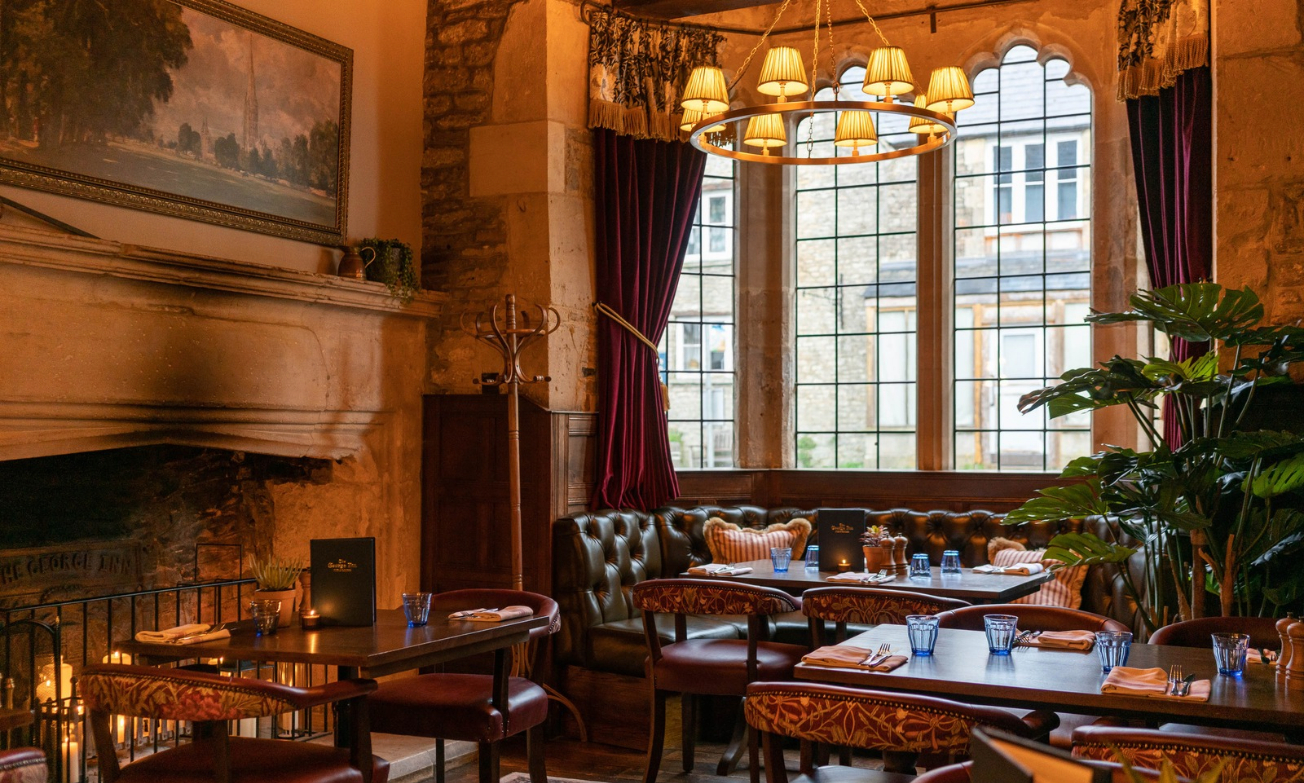
Image: The George Inn
The pub, based in the small village of Norton St Philip just 8 miles south of Bath, dates back an astonishing 630 years to the late 1390s. Stepping inside is like entering a time capsule; you can almost see the various merchants and traders propping up the bar while selling their wares to humble pilgrims!
As you sit by the massive stone fireplace, looking out of the mullioned bay windows and ensconced in wood panelling, you’ll feel positively medieval. However, the menu consists of much more modern classics, all crafted to the exceptional quality you’d expect from a Butcombe Brewery pub. To drink, take your pick from Butcombe’s range of award-winning ales on tap, or the extensive range of cocktails, pitchers, wines, and spirits.
In the sunnier months, be sure to sit out in The George Inn’s garden, which offers breathtaking views over the surrounding Somerset hills. It’s the perfect place to stop for a break after a day exploring nearby attractions such as Frome, Longleat Safari Park, and Lacock Abbey, to name a few.

Image: Beer garden at The George Inn
Why not stay longer and immerse yourself even further in a medieval fantasy? The George Inn offers a stunning selection of thirteen boutique, en-suite rooms, each of which is packed full of the building’s original features.
Read more:
Related
Comments
Comments are disabled for this post.


 Maps and Guides
 Travel Information
 Special Offers
 Enewsletter
 Book Tickets
